
What the word dieta means in this context
Why the plant is the center of the process
Ayahuasca's role in the dieta process
Why restrictions matter and what they protect
Why the dieta includes a before, a during, and an after
The word dieta makes many people think only of food, but in this context the restrictions are just one visible part of a larger discipline. That’s because a dieta is a period of time (from weeks to months, or even years) which an individual dedicates to becoming a student of their plant. To do this, you have to regulate how you live so the relationship with the plant can be gently formed, and you do that through your presence, silence, simple food, and by following the maestro’s guidance.
In practice, a dieta includes the plant, the maestro, the restrictions, the protected environment, and the slower process of learning from the medicine over time.
A dieta is centered on a specific master plant or tree, which is going to be your teacher. You drink an infuse of your medicinal plant daily (or whenever instructed).
An authentic maestros with many dietas (meaning he dieted many plants for a long period of time) guides the process, works through icaros and other forms of traditional healing, and helps hold the relationship with the plant.
Simplicity, relative isolation, and a protected environment matter to tune into the subtle energy and guidance of your plant.
They help purify your body and spirit to better receive your plant.
A dieta is not just about the time you spend at the healing center. But the weeks leading to the dieta itself, and the months after, are of critical importance to receive your plant's help and implement it in your life.
In the Shipibo world, master plants are spoken of as medicine, teachers, and healers. For hundreds, if not thousands of years, that’s what indigenous groups used to heal themselves from any ailment. As Westerners, we need to come with an open mind and heart, understanding that we don’t hold all the truths. On this site, terms like healing and medicine are being used in the traditional, spiritual, and energetic sense of the dieta (they are not promises of biomedical outcomes, and they are not substitutes for licensed care where licensed care is needed).
People often ask, “How can a plant teach?”
That can’t be fully understood by the mind, because it has to be experienced, also because every plant works differently based on who you are and what you need. The relationship you build with your plant is very subtle, gentle, and unfolds over time. It can be in ways that are experiential, energetic, emotional, moral, spiritual, and also very concrete in life.
What happens is, bit by bit, you realize you have acquired a new energy that is now part of you, and it helps you look at life and feel things at a new, deeper, cleaner level. And that positive change affects every aspect of your life.
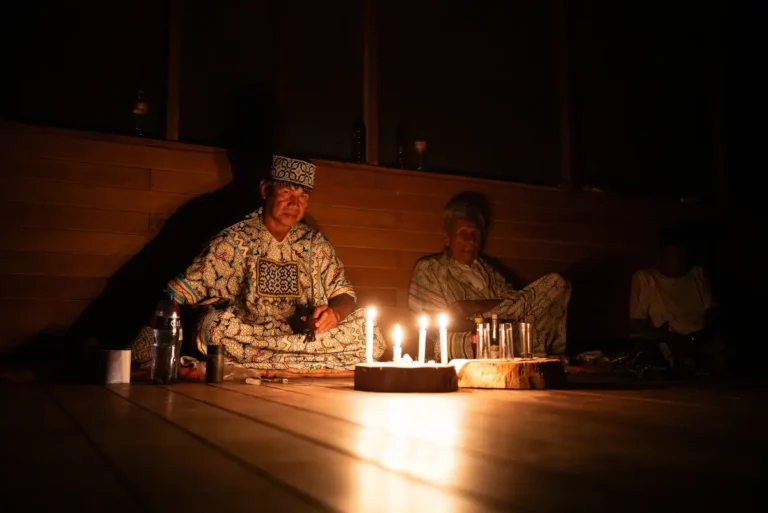
A dieta involves receiving a specific plant, living with some restrictions, spending time in simplicity in close contact with nature, relative isolation, participating in ceremonies, and opening yourself to a slower process of listening and healing. That’s because, usually, plants whispers, they don’t shout. That’s why creating the space and silence is very important to let your plant help you.
Some parts of the dieta may feel subtle rather than dramatic
The work continues in dreams, body states, emotions, or changes in perception
The maestro's role is crucial to help align the plant's energy with yours
Every dieta is unique, because each plant works differently based on exactly who you are and what you need
A dieta is not a pre-ceremony food protocol.
A dieta is not just an ayahuasca retreat.
A dieta is not about collecting mystical experiences.
A dieta is not a luxury wellness retreat.